Embedded Software Development ServicesFrom Firmware to Cloud
Firmware, device interfaces, communications and the backend, delivered by one team. Shenzhen, since 2016.
Service Overview
Specializing in embedded system development including low-level drivers, OS porting, application development. Team has full-stack capabilities from hardware design to software development to provide stable and reliable embedded solutions.
XTELL's embedded software development services cover firmware, device interfaces, communications and the backend, all from one team. A Shenzhen company, ten years, more than 100 projects.
Which kinds of embedded software we build
We build four kinds of embedded software: firmware and RTOS development, low-power management, communications and positioning, and device interfaces. This is the overview page for embedded software - firmware implementation details are on the firmware development page, and Linux kernel and driver work on the Linux BSP page. Not sure which layer your need falls into? Start by asking here and we will tell you.
Who we serve
As an embedded software development company, XTELL works mostly for western B2B companies, most of them building hardware products that will be sold and must pass certification. Product types delivered include IoT terminals reporting over GPRS/GPS, electric two-wheeler dashboards and wearables such as smart watches. FCC/CE certification is the normal constraint on these projects, not the exception.
Why firmware, app and backend should sit with one team
This is our biggest difference from software-only suppliers. When a device misbehaves, a software-only company can only relay the symptom - "the server received no data"; we open the firmware and see what the device actually sent and at which layer it was lost. Diagnosis happens inside one company, not in email threads between several suppliers.
Case: the Apollo2 low-power IoT terminal
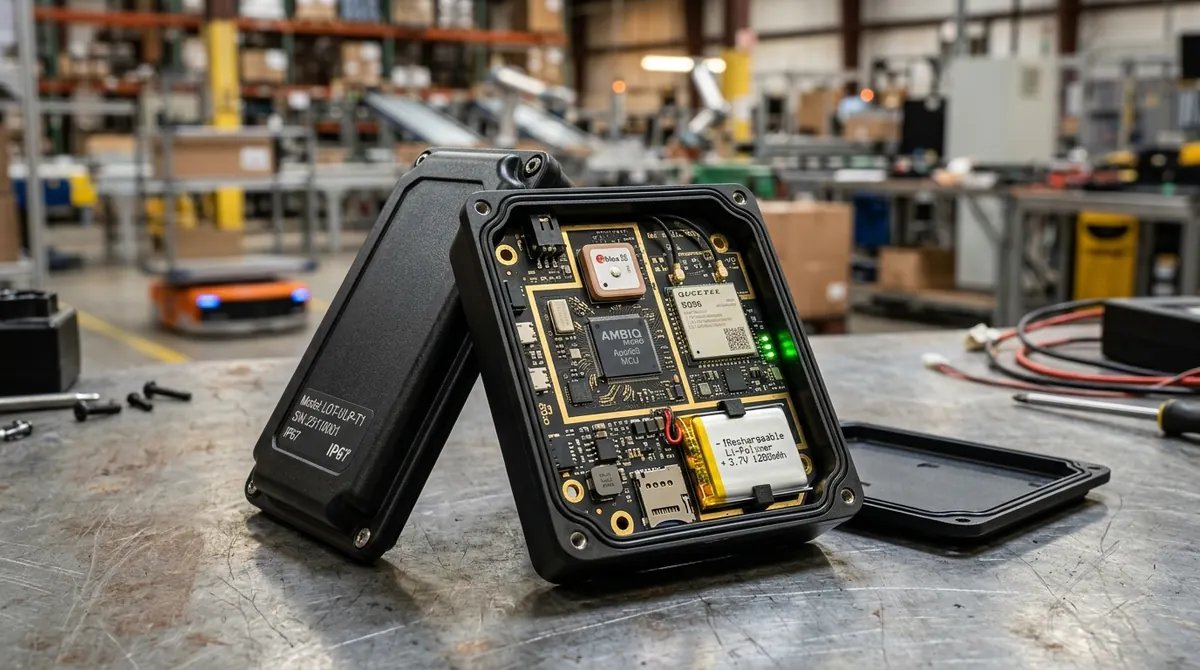
Tech stack: C, Apollo2, Keil/IAR/GCC, GPRS, GPS, RTC, ADC.
Challenge: ultra-low-power deep sleep on the Apollo2 platform while keeping GPRS/GPS communication.
Approach: use the Apollo2's low-power modes, wake on an RTC timer, and activate GPRS/GPS only when needed; Flash and a watchdog keep the system reliable - the devices are deployed unattended, where nobody can be counted on to press reset.
Case: the low-power smart watch
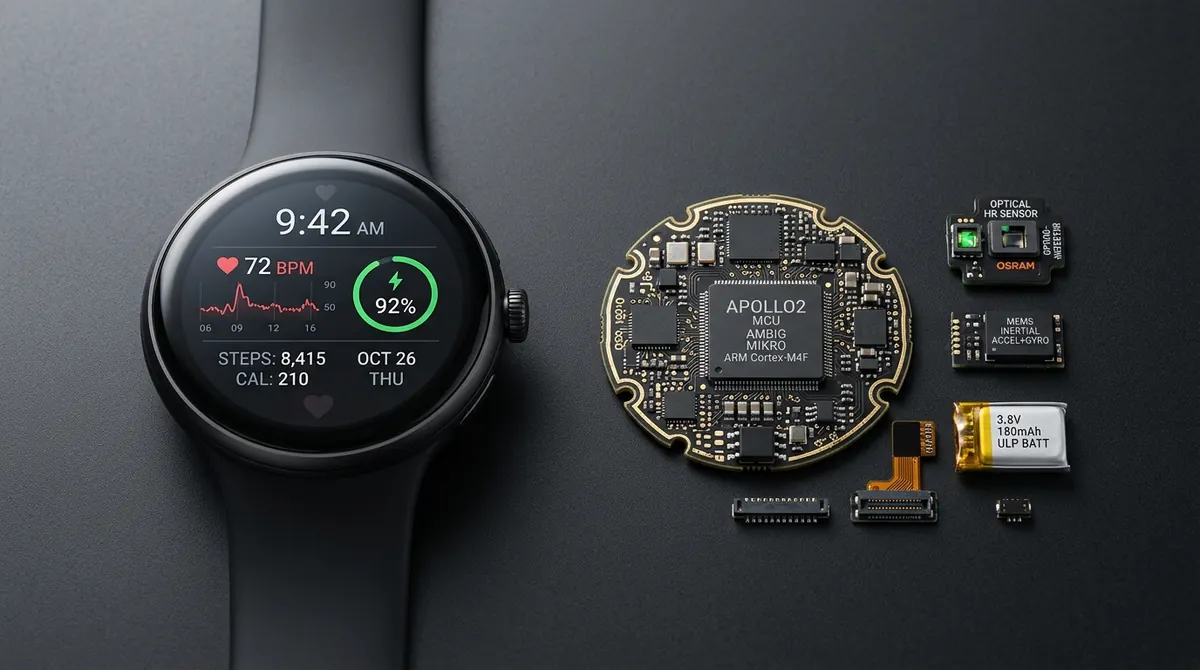
Hardware: Apollo2 (Cortex-M4), a 240x240 colour touch screen, heart rate, accelerometer and gyroscope sensors, Bluetooth 5.0 and WiFi. Software: C on an RTOS, with a companion phone app.
Challenge: conventional smart watches typically need charging daily, which is a poor experience; cutting power significantly without losing functionality was the core problem.
Approach: a multi-level power management strategy - optimised hardware selection plus tuned software algorithms, with intelligent sleep and wake, to stretch battery life as far as possible.
Case: electric vehicle dashboard UI/UX design
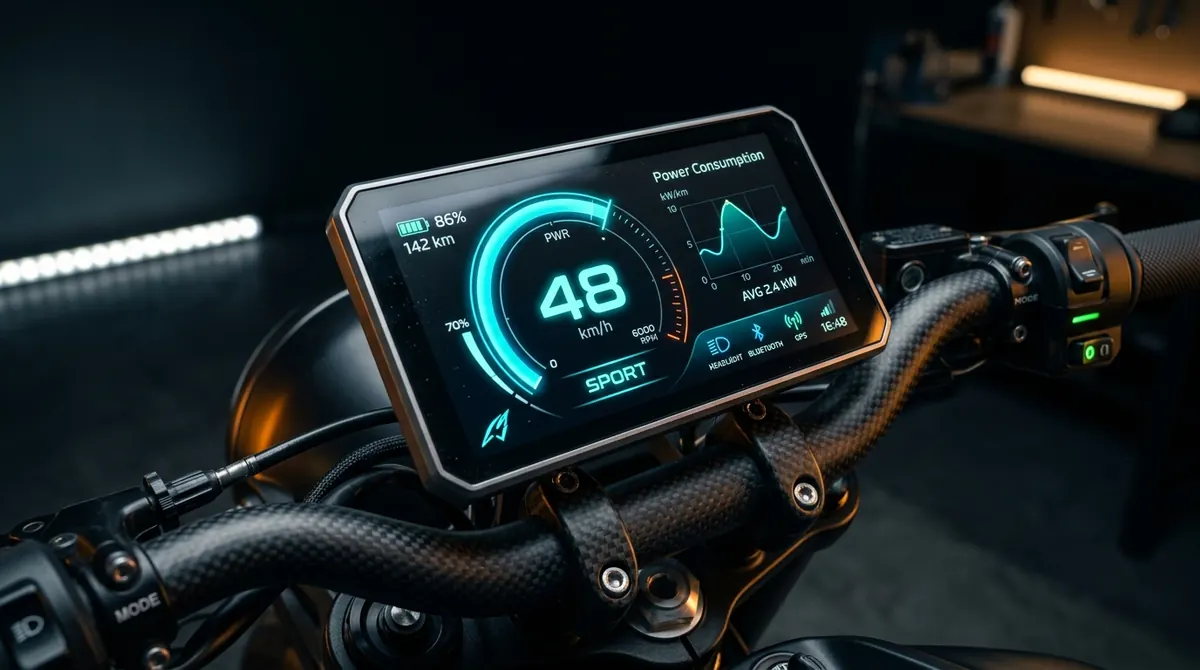
Platform: STM32 with TouchGFX.
Challenge: vehicle screens have limited resolution, yet information must be clear and interaction animation smooth.
Approach: a dark theme suited to the in-vehicle environment; smooth transitions with frame sequences and MP4 animation; a systematic icon set; and interaction prototype documents that were not discarded once drawn, but directly guided the implementation.
Low power: the methods and the costs
The method has three main lines: start from low-power chip selection (parts like the Apollo2); multi-level power management with tiers by device state; and RTC timed wake-up with the radio activated only on demand.
The costs need stating too: during deep sleep the device is offline and cannot respond at any moment, and battery life has to be traded against functionality. We put these trade-offs on the table at the requirements stage rather than telling you at delivery.
Beyond the device: mobile app, backend and integration
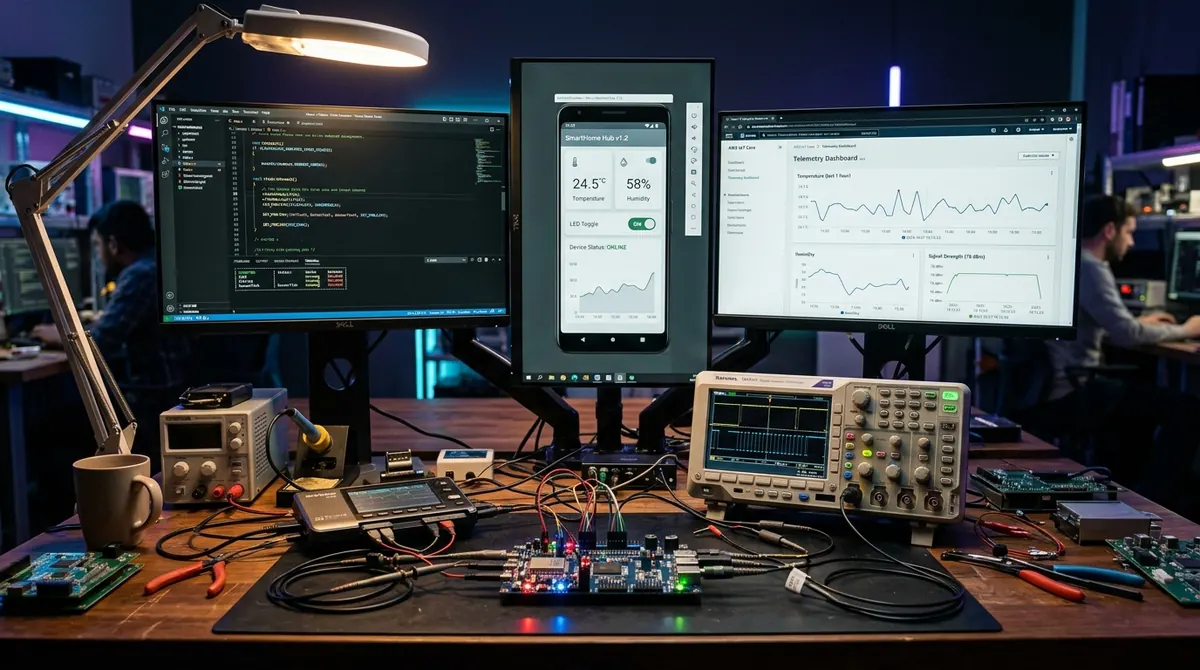
Embedded software is rarely delivered on its own: a watch needs a phone app, and a terminal reports data to a server and an IoT platform. Mobile apps, backends and IoT platforms are all within our work, and come from the same team as the firmware. For the client it means cross-layer integration needs no second supplier.
Toolchain and tech stack
What is listed here has been used on real projects, not copied from a generic list:
• Language and runtime: C, RTOS
• Build environments: Keil, IAR, GCC
• MCUs: STM32, Apollo2 (Cortex-M4)
• Peripherals and connectivity: ADC, RTC, GPRS, GPS, Bluetooth 5.0, WiFi
• Device interfaces: TouchGFX
• Adjacent layers: KiCad for PCB, FreeCAD for mechanics, and the vendor toolchains Vivado, Quartus, Libero and Diamond for FPGA - there are no substitutes at that layer
Engagement models and delivery boundaries
We offer both open and closed engagement models. Delivery scope - including whether source code and design files are included - is agreed item by item in the contract for each project, and this page makes no blanket commitment. The reason is simple: intellectual property arrangements differ greatly between projects, and settling them before work starts is more reliable than a nice sentence on a web page.
Our process: from requirements to certification support
• Requirements: power budget, certification requirements, hardware platform and delivery boundaries
• Proposal and prototype: as on the electric vehicle dashboard project, an interaction prototype comes first, then development
• Development and integration: firmware, app and backend integrated by the same team
• Certification support: clients' products routinely need FCC, CE or similar certification, and we carry the related development work
• Delivery: in the scope and form agreed in the contract
About XTELL
XTELL (Shenzhen XTELL Future Technology) was founded in Shenzhen in 2016. Over the ten years since, it has delivered more than 100 projects, with clients predominantly western B2B companies. Its work covers every layer from circuit board to cloud: PCB design, FPGA, embedded firmware, Linux BSP, device interfaces, mobile apps, backends and IoT platforms. For an embedded systems development company, cross-layer capability is not a bonus - when a device fails, it decides whether diagnosis happens in-house or bounces between suppliers.
Service Features
Technology Stack
Related Project Cases
Apollo2 Low-Power IoT Terminal
Apollo2 running RTC-timed wakeup with GPRS and GPS activated on demand, flash and watchdog for reliability, built across Keil, IAR and GCC toolchains.
E-Bike Dashboard on STM32 TouchGFX
Dashboard interface built with TouchGFX on STM32 - dark theme for in-vehicle readability, boot, gear and compass animation sequences, and a systematic icon resource set.
Low-Power Smartwatch
Apollo2 Cortex-M4 with heart rate, accelerometer and gyroscope against a 240x240 colour touch panel, using multi-level power management with hardware selection and algorithm tuning.
What You Receive
Frequently Asked Questions
Do you deliver source code or design files?
We work under both open and closed models, and delivery scope is agreed item by item in the contract for each project; this page makes no blanket commitment. Some projects need the full source, others only need deliverables that can be maintained long term - which is exactly what belongs in the contract. Agreeing it before work starts is far better than disputing it afterwards.
How low can power consumption go?
It depends on the hardware platform, power budget and functional requirements, and we do not give blanket numbers online. Real approaches for reference: Apollo2 deep sleep with RTC timed wake-up and GPRS/GPS activated on demand (the IoT terminal project); multi-level power management with intelligent sleep and wake (the smart watch project). The cost is that the device is not online in real time during deep sleep - these trade-offs are settled at the requirements stage.
How are you different from a typical embedded development company?
One team writes the firmware, the mobile app and the backend. When a device misbehaves, most suppliers can only relay the symptom; we open the firmware, see what the device actually sent and judge whether the problem is in the firmware, the communication, the app or the server. Cross-layer diagnosis therefore happens inside one company, not in email threads between several suppliers.
Are you responsible for FCC/CE certification?
Certificates are issued by certification bodies, not by us. What we carry is the development work certification depends on: clients' products routinely need FCC, CE or similar certification, and we complete the supporting software work, with the division of responsibilities agreed per project.
How do we start, and why are there no prices or lead times on this page?
Lead times and prices depend on the scope, so publishing them online means nothing. Send us your product requirements, target market or existing specifications - a complete project starting from the circuit board, or one software layer on hardware you already have, can both be discussed. After assessment we give a proposal, quote and schedule; where sensitive information is involved, we sign an NDA first and then exchange details.
Specialist Capabilities
Each can be engaged on its own, or as part of a full product build.
Need Professional Services?
Contact us for customized solutions and quotes